SALTOS
How can every sign-up be taken during a paid campaign, with no downtime and no lost data?
A class sign-up system for children's acrobatics, built for a free trial week campaign, with a timetable and a panel where the club runs enrolment.
- Client
- SALTOS
- Services
- Websites, Business systems
- Sector
- Sport and leisure
- Website
- zapisy.saltos.pl
as of September 2026
The situation before
SALTOS, a club in Łódź, was enrolling children for a free week of acrobatics classes from 31 August to 5 September 2026. The advertising was paid up front and the start date could not move, so any break in taking sign-ups would have wasted budget.
Six days held seven groups and seventeen class slots, and the club's timetable named the acrobatics groups by age band and a level from 1 to 6. The adverts went live on 18 August, almost two weeks before the first class. The commission was a sign-up service with one list to run enrolment from.
Questions the project had to answer
- How should children's data and parental consent be protected from the first hour of advertising?
- How can the club see at any moment how full each class slot is?
Scope of work
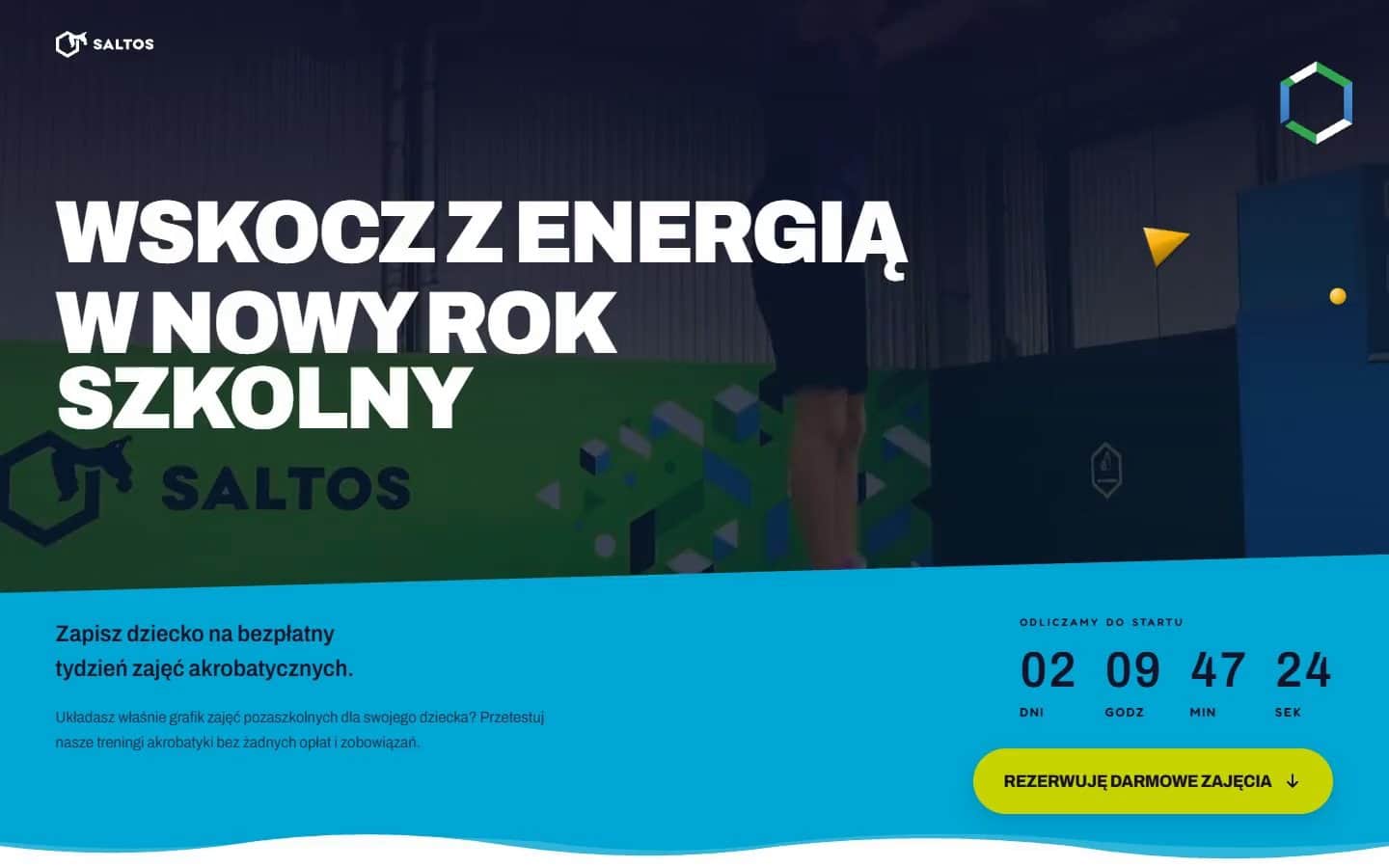
- Landing page for the ad campaign
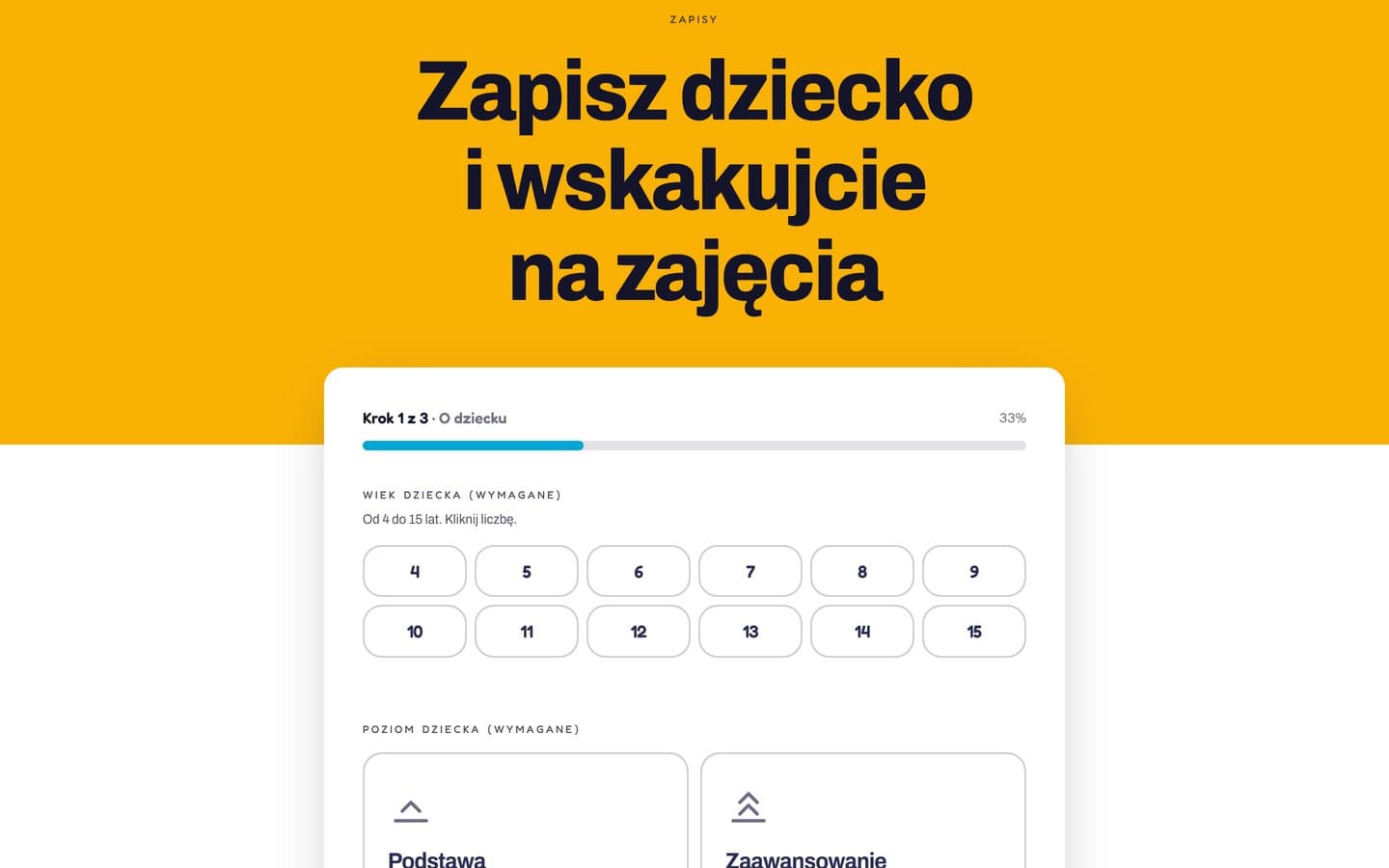
- Online sign-ups in three steps
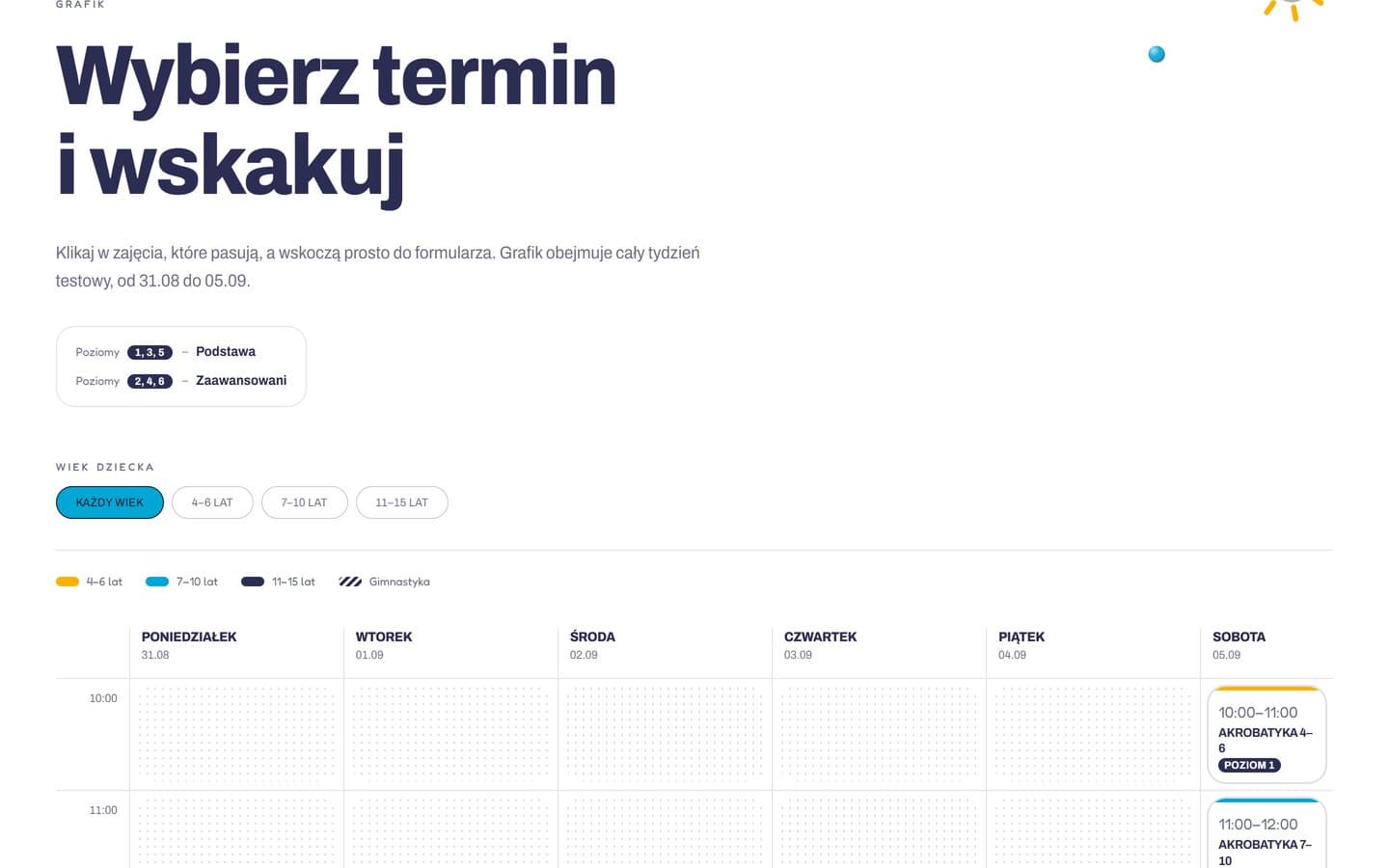
- Timetable of seventeen class slots with an age filter
- Entry panel with spreadsheet and PDF downloads
- Bot and spam protection
- Campaign tracking in Google Tag Manager
- Form monitoring during the campaign
Connected services
- Next.js
- Vercel
- Supabase
- Google Analytics
- Tag Manager
- Cloudflare
How we did it
Timetable from club materials
The season's timetable existed only in the club's own materials. We moved it onto the site slot by slot, with real class times and the brand's section colours. Anything the materials left open went back to the club as a question before publication. Parents filter the timetable by the child's age, in bands 4 to 6, 7 to 10 and 11 to 15, as in the club's schedule. Each slot tile shows the full group name and level.
A day after the adverts started, the club asked us to change four slots in the timetable. The timetable and form handle more than one trampoline park, and a location choice appears by itself once another is added. Had the database stopped responding mid-campaign, the timetable would have stayed on the site in its last known state.
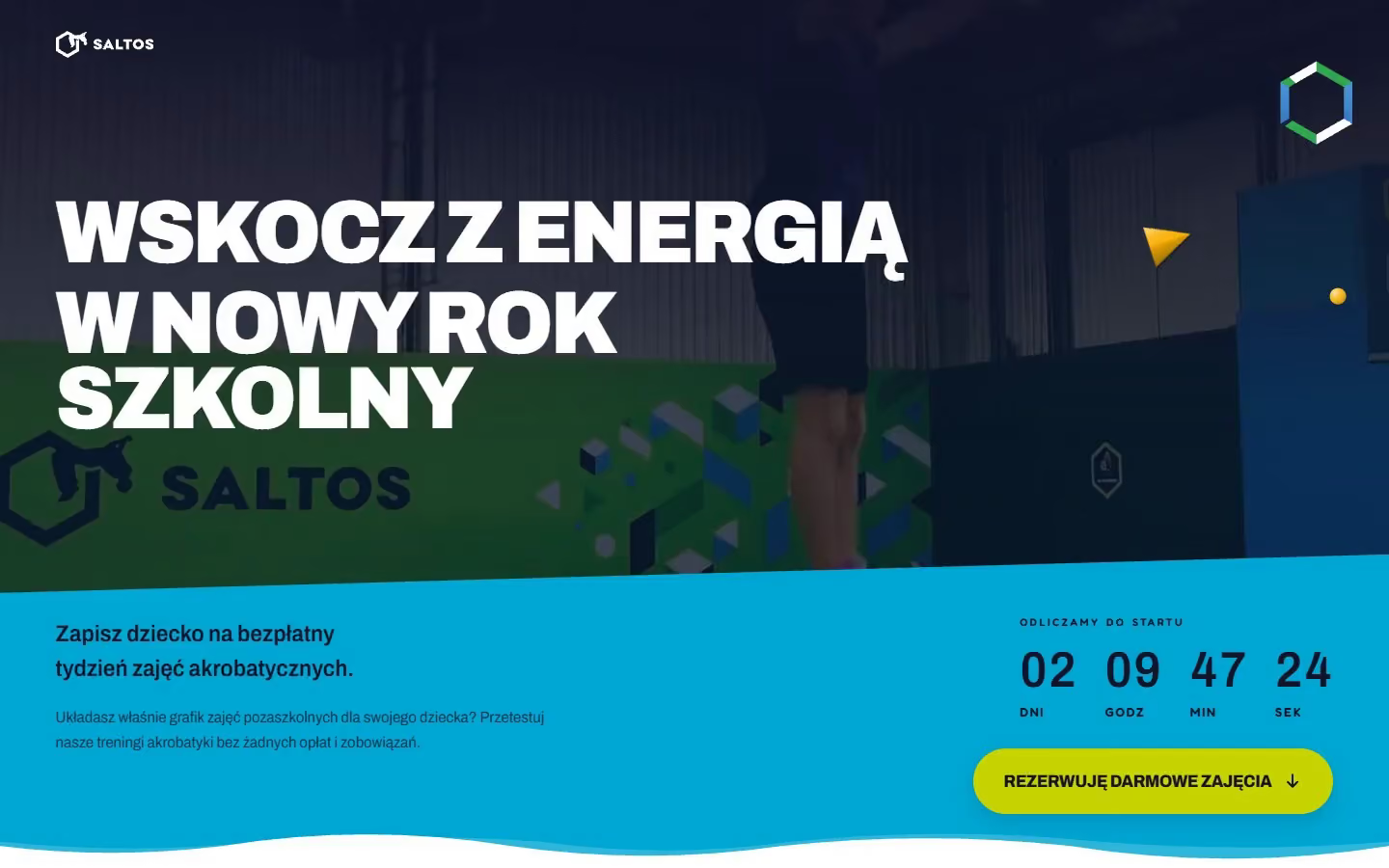
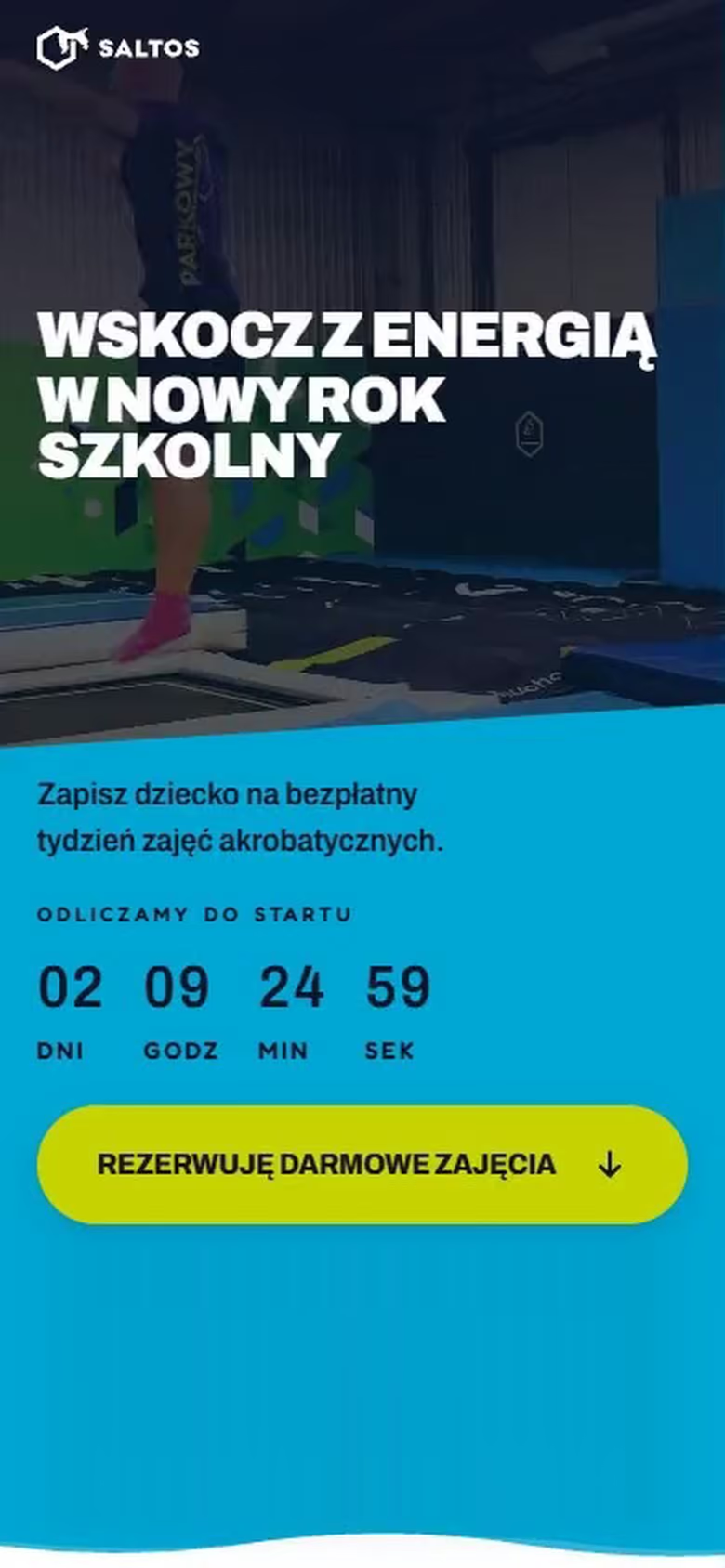
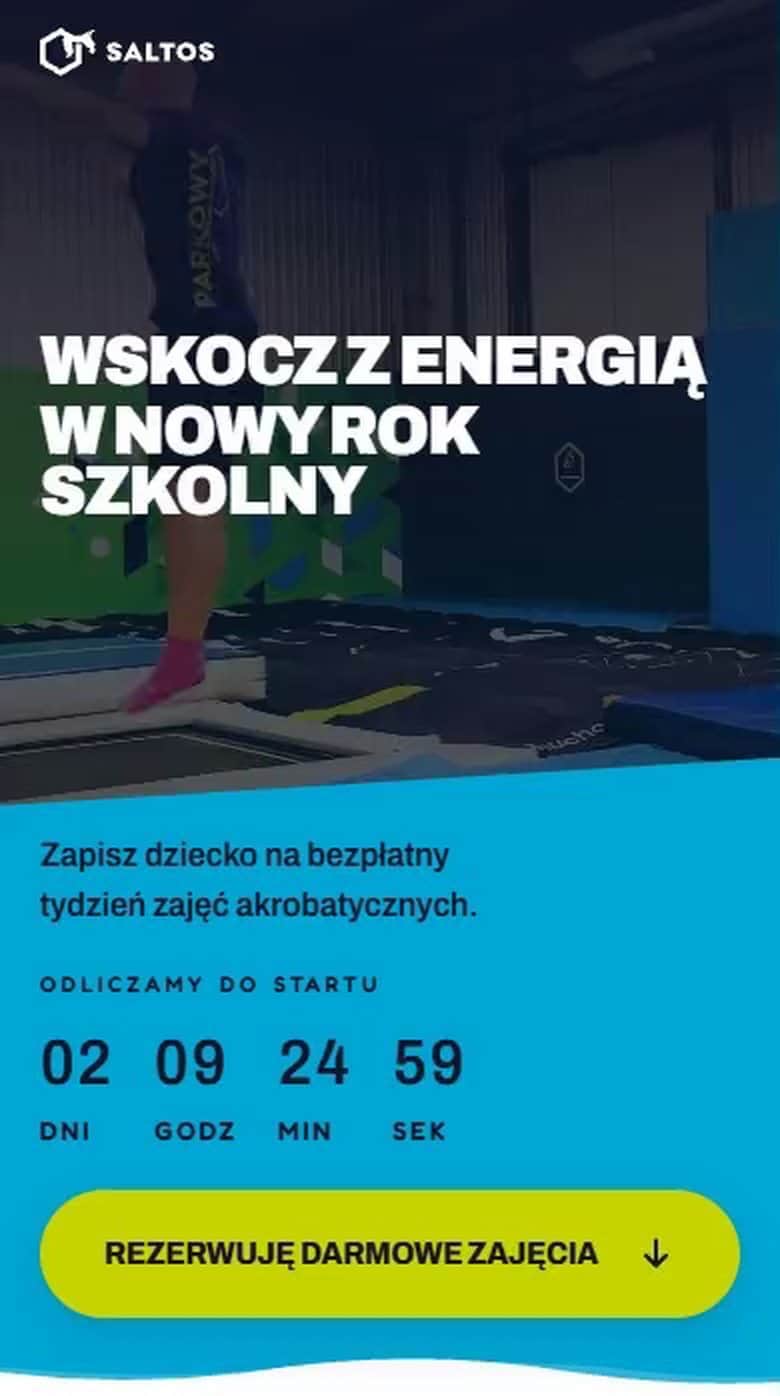
The header played footage the club shot in its trampoline park, and a counter counted down to the first class. We prepared the footage in slow motion, in landscape and portrait framing, without the strip of hall ceiling and with stronger contrast. Texts from the club's brief went onto the site word for word, and we wrote the form labels and messages in the tone of saltos.pl.
Three-step sign-up
A parent picks a slot, taps the child's age on a tile that takes its group's colour, then chooses a level and one class or the whole week. Finally they leave contact details and consents, and the club gets back by phone or email. The form remembers typed details, but consent to process a child's data must be ticked each time.
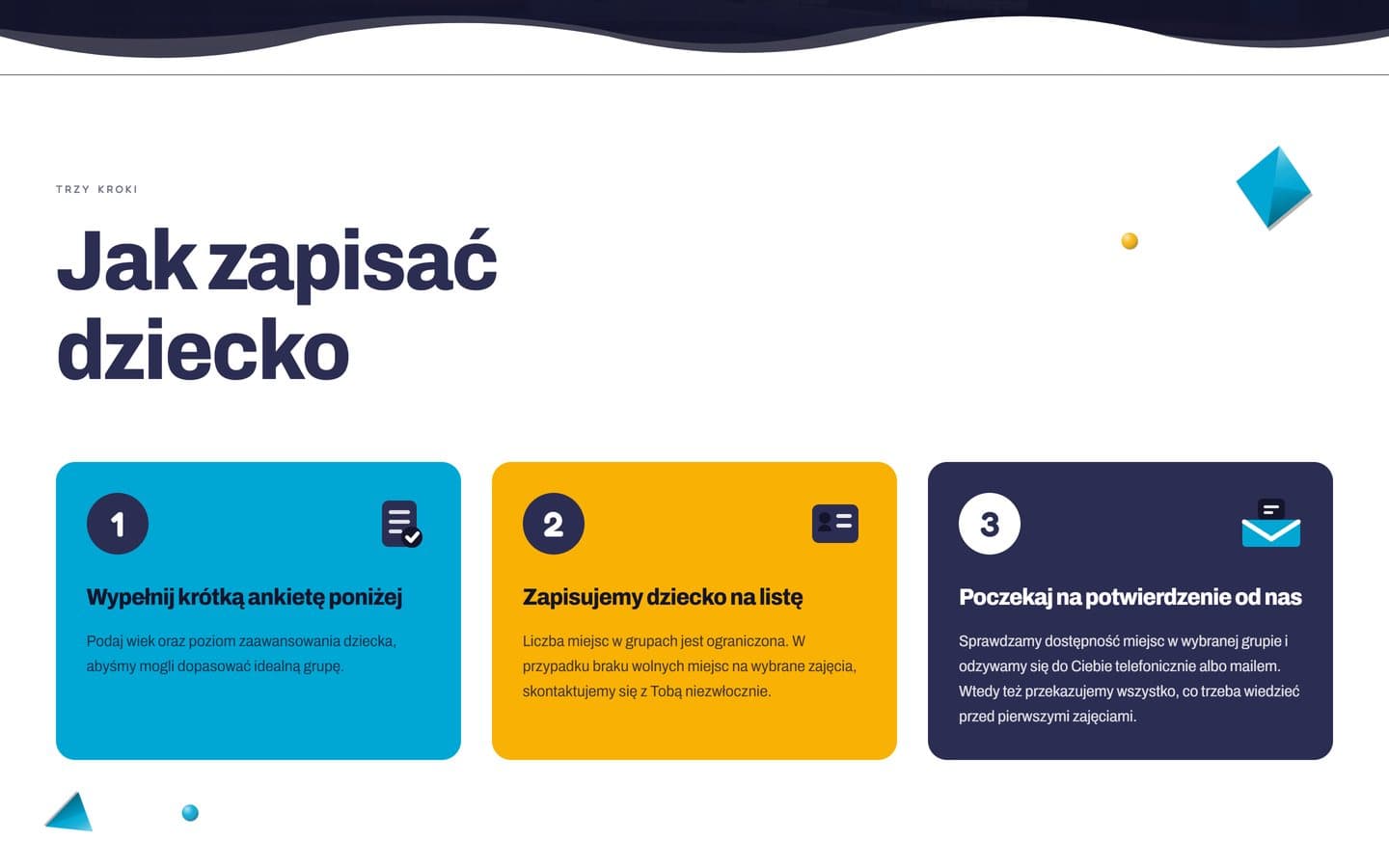
A second age check after sending keeps four-year-olds out of teenage groups. Campaign measurement starts only after consent in the cookie window. Three coloured cards on the page explain how signing up works, from the form through the list to confirmation from the club.
Club panel
Club staff have a password-protected panel showing how full each slot is, refreshed every fifteen seconds, so changes made by a colleague show up without reloading. Sign-ups can be accepted, rejected or reverted, and one click on a parent's phone or email starts a call or message. The list can be filtered by status and searched by name, phone number or email.
The list downloads to a spreadsheet with Polish characters or a PDF for reception, and both files follow the filters set. During the campaign an automatic check every ten minutes confirmed the site and database responded, and a failure would have sent a notification to our phone. Afterwards the same address opened bookings for free trial classes in the new season.
Result
400+
sign-ups collected in a week and a halfas of September 2026
Selected screens

Planning a similar project? We give the exact price and timeline after a short conversation.
Ask for a quoteNext project
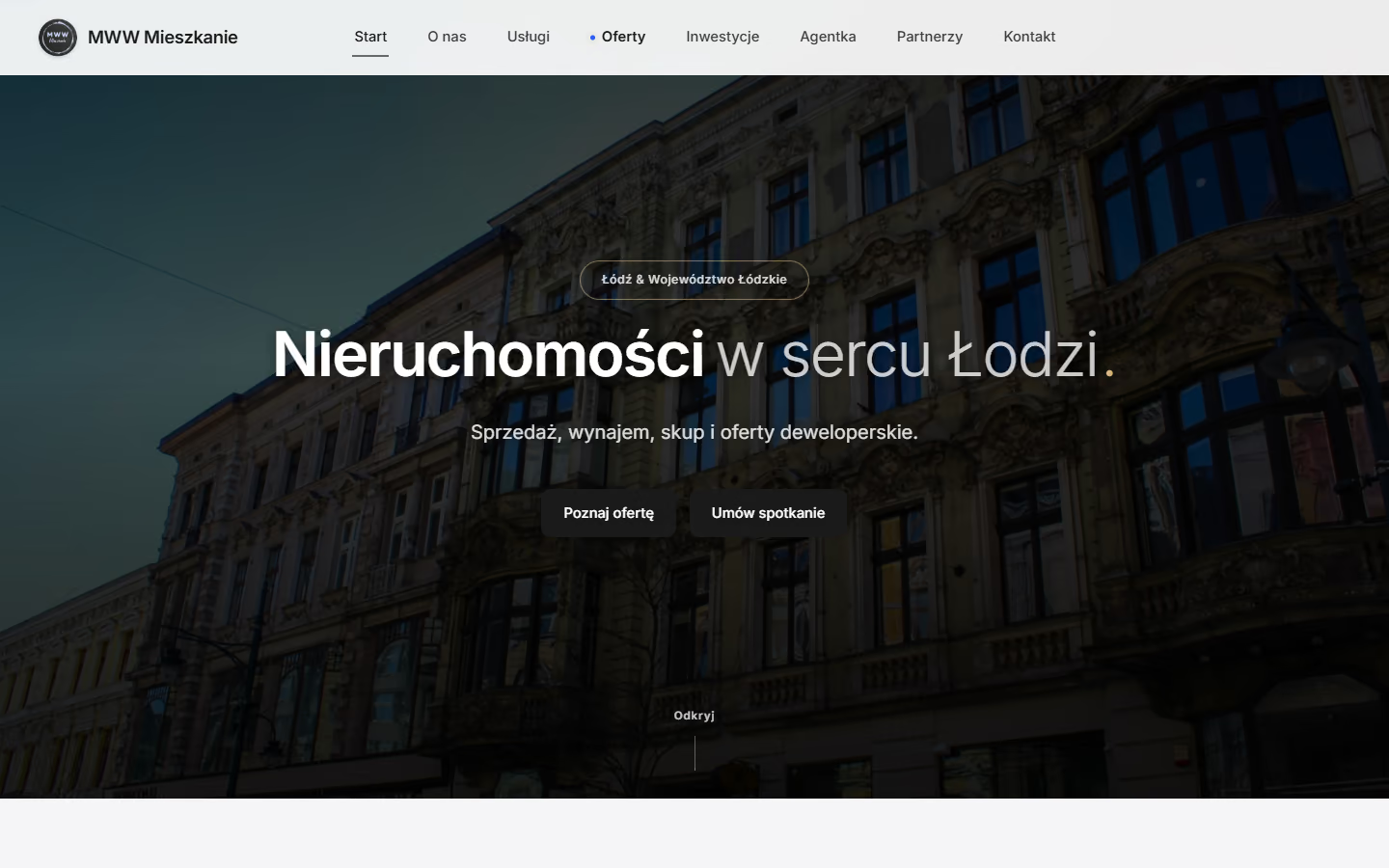
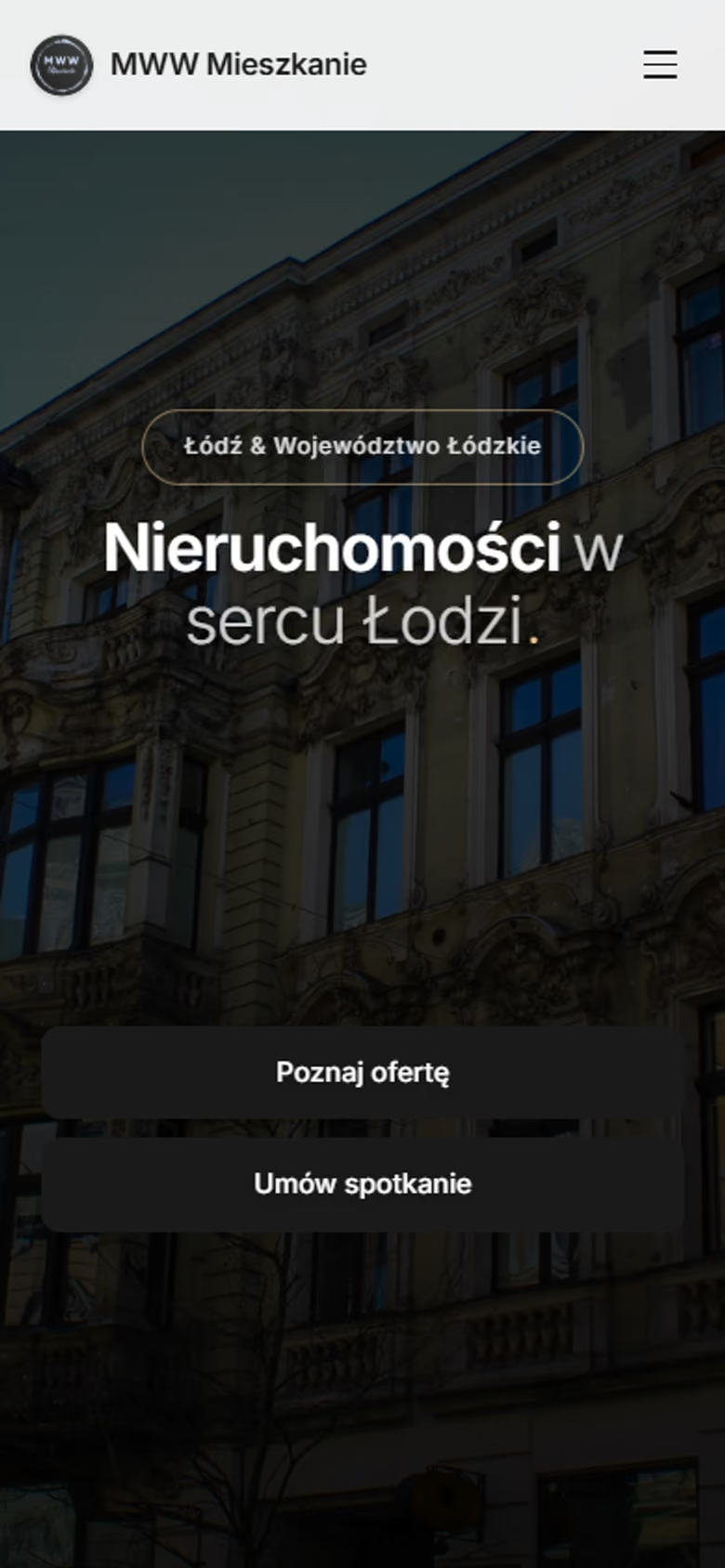
MWW Mieszkanie
The agency publishes its own listings from the panel, and each has its own address and an A4 sheet for client meetings.