EMKACAR-SERVICE
How should a car repair shop website show drivers that the shop can handle their repair?
A car repair shop's website in Łódź that sets out six services task by task and prepares drivers for their visit.
- Client
- EMKACAR-SERVICE
- Services
- Websites
- Sector
- Automotive
- Website
- emkacar-service.pl
as of September 2026
The situation before
EMKACAR-SERVICE, a Nexus Auto network partner in the Andrzejów district of Łódź, repairs cars and vans up to 3.5 tonnes of every make.
The shop handles routine servicing, such as oil and tyre changes, as well as bigger repairs like timing belts and clutches. It takes bookings by phone and e-mail, so the site was built to lead straight to a call.
The same domain previously held a single scrolling page with sections on the shop, its services and directions, plus a contact form. It was replaced by a four-page site that keeps the client's own descriptions, opening hours, six services and the guarantee on work and parts.
Questions the project had to answer
- How do you prepare a driver for the visit so that the diagnosis takes less time?
- How do you show directions on a map without a cookie consent banner?
Scope of work
- Visual design and build
- Content moved from the previous site
- Detail for six services and the repair process
- Pre-visit tips and answers to common questions
- Contact page with hours, directions and a map
- Call bar on phones
- Data for Google and link previews
- Launch on the client's domain
Connected services
- Next.js
- Vercel
- Google Maps
- OpenStreetMap
How we did it
Services with the actual work
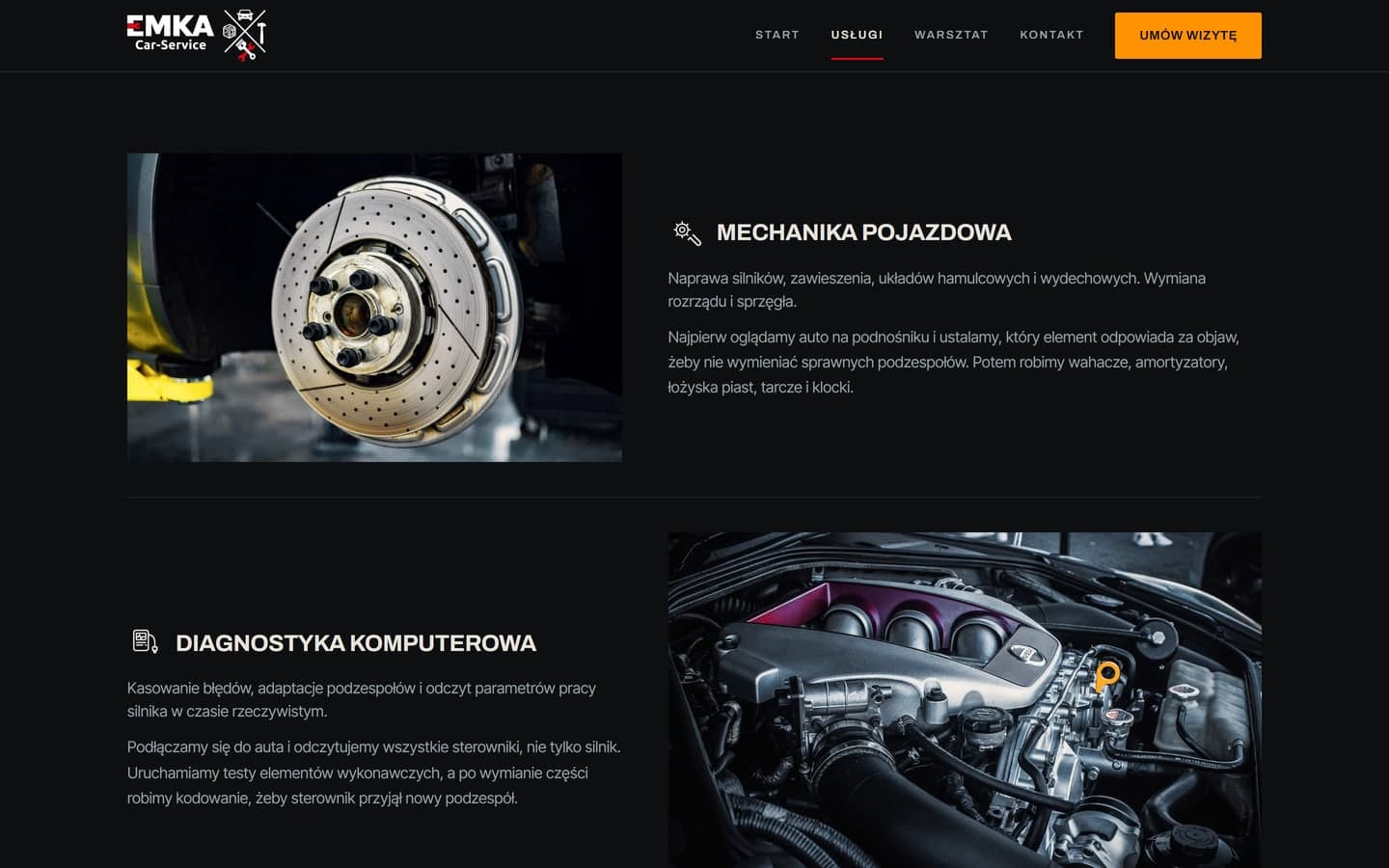
Six services, from vehicle mechanics and computer diagnostics to air conditioning, tyres and auto electrics, keep their short descriptions from the old site. Each also has its own icon, and we added the work behind it. For air conditioning that means refrigerant recovery and a leak test before refilling, and for auto electrics measuring the standby current when a battery drains while parked.
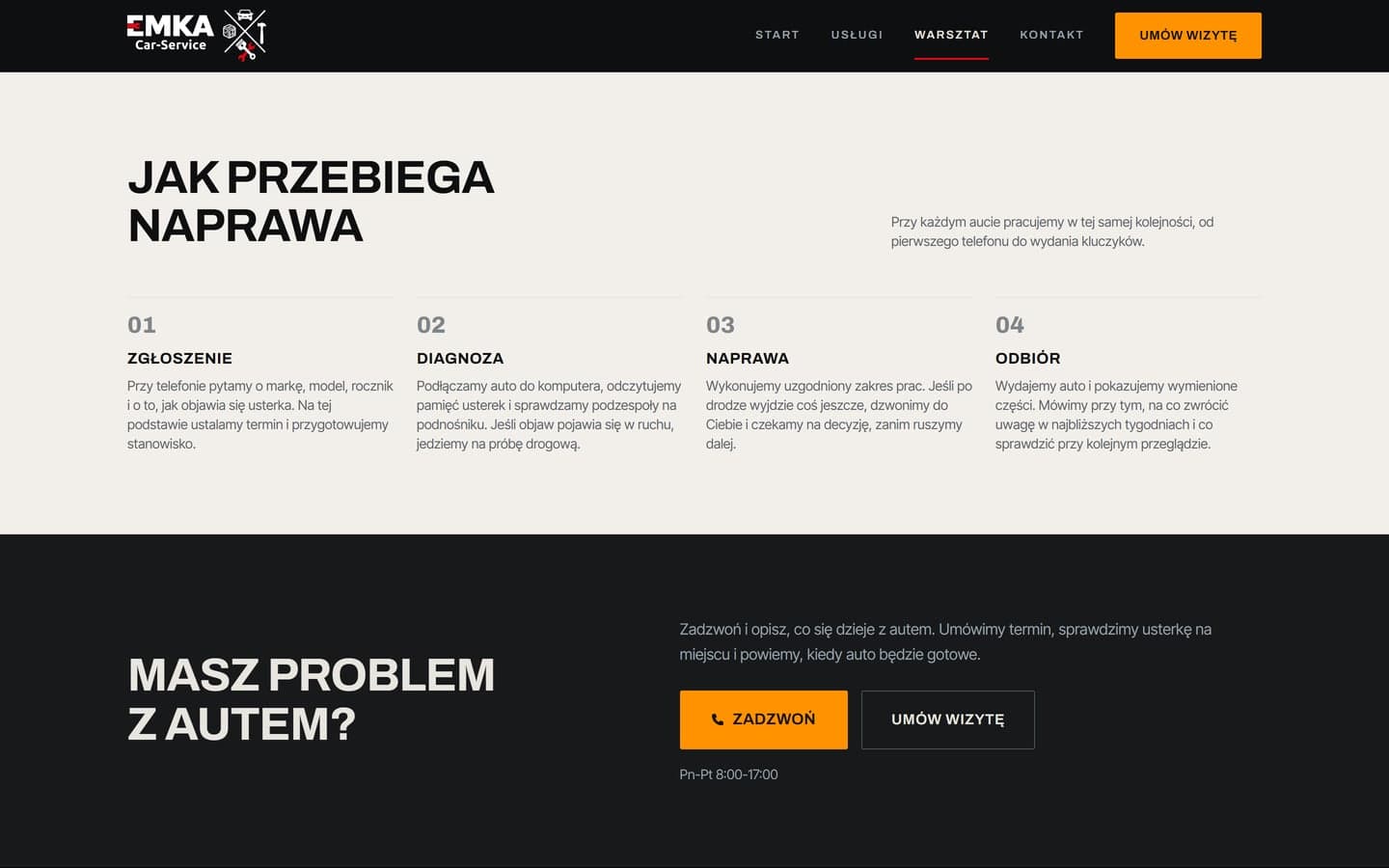
Drivers can check before calling whether the shop takes on their fault. The repair process has four stages, from the first call through diagnosis and repair to collection, with a call to the customer before any extra work. The workshop page sets out four pillars of the shop's work, namely its equipment, punctuality, guarantee on work and parts, and service for every make.
Preparing for the visit
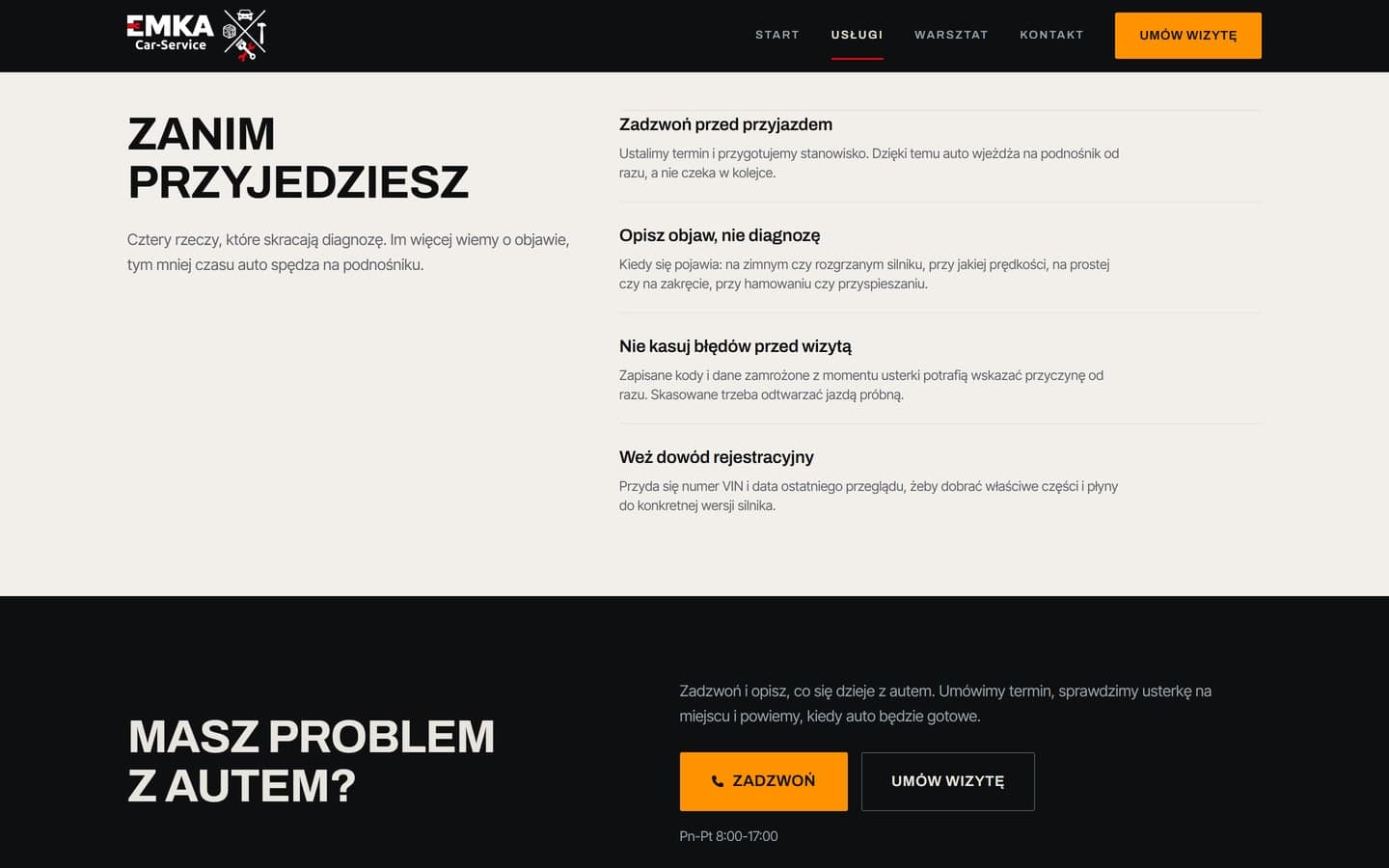
A separate block gives four tips that shorten the diagnosis, from calling ahead and describing the symptom to not clearing fault codes and bringing the registration document. Six questions and answers explain, among other things, whether a booking is needed, how long a repair takes and whether the shop fits parts the customer brings in.
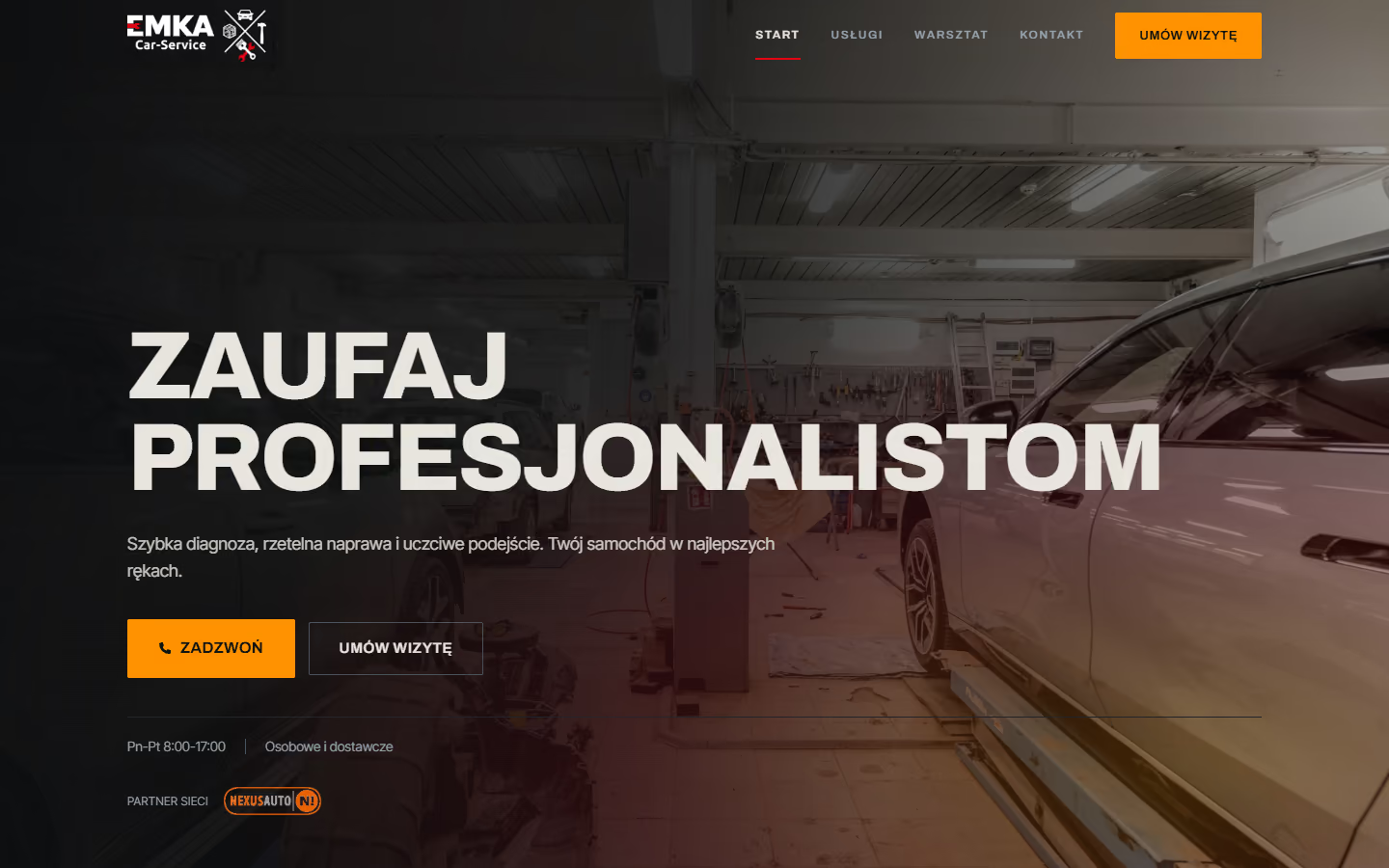
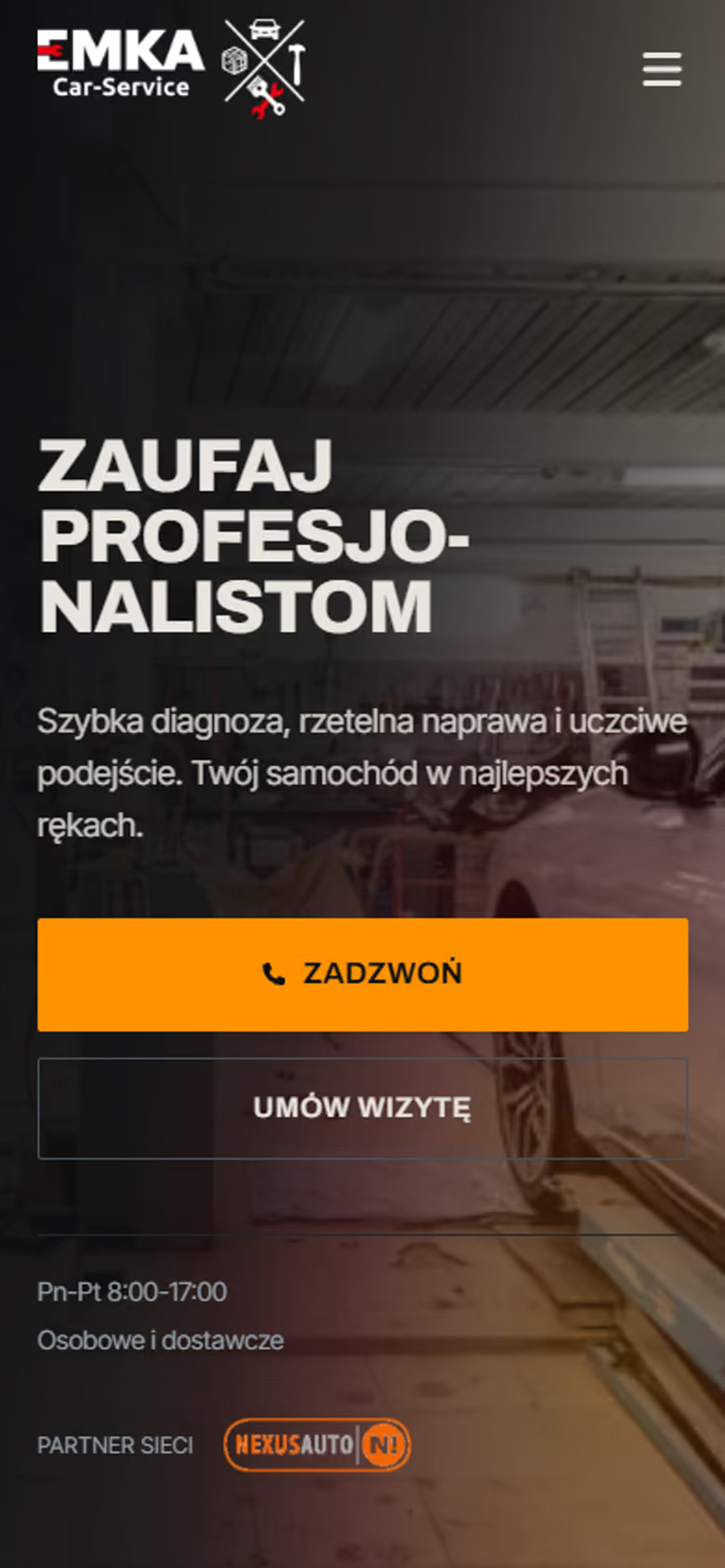
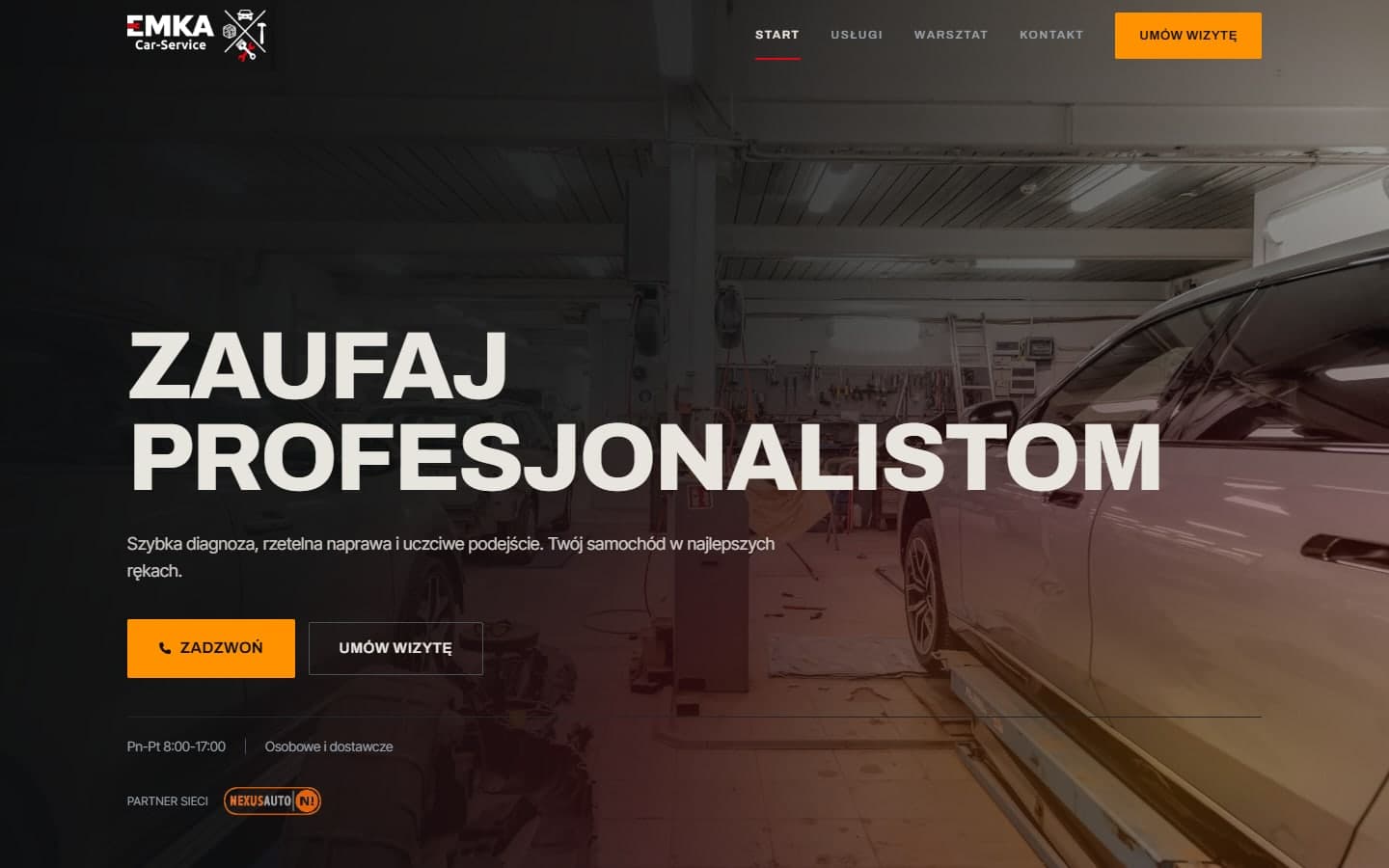
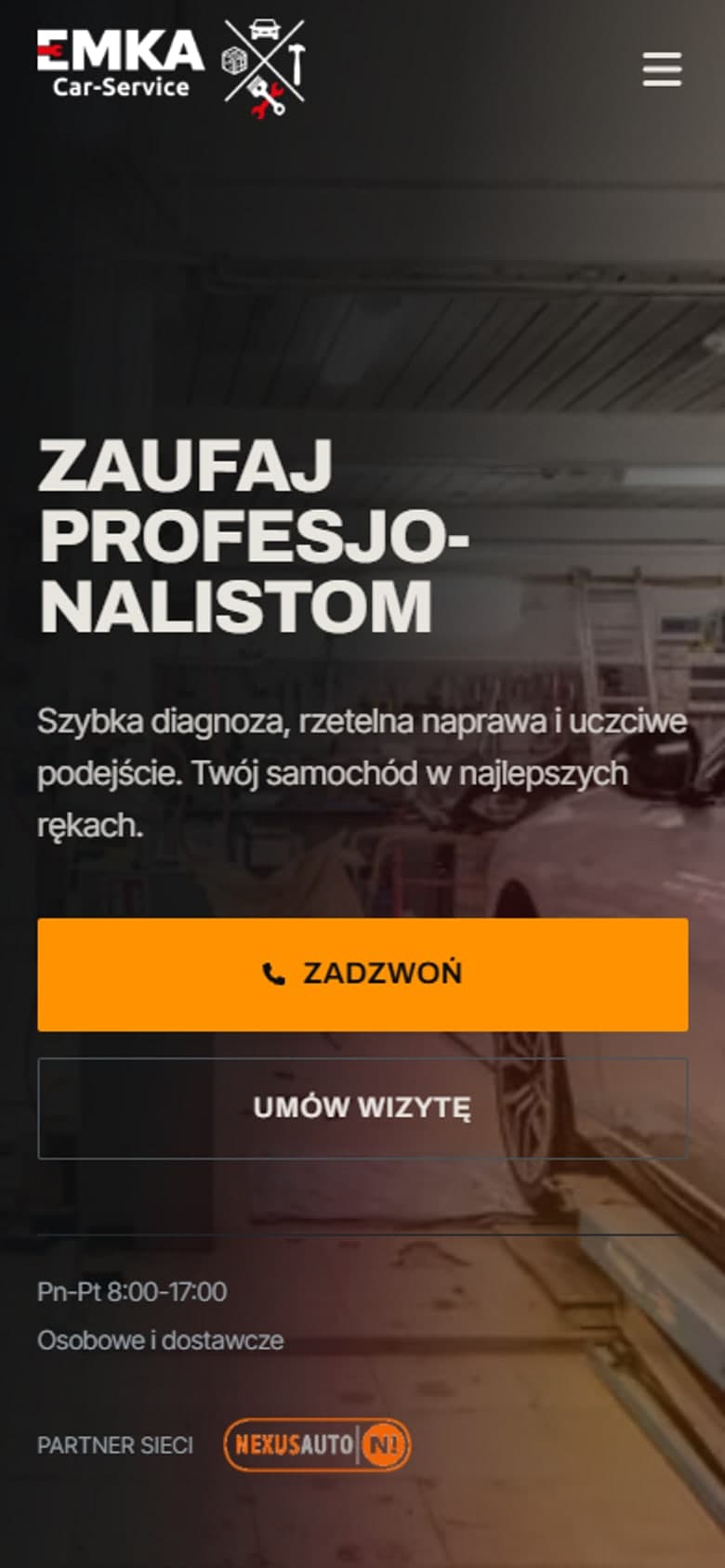
Above the first and larger button, which calls the shop, the home page keeps the client's own heading, Zaufaj profesjonalistom. Below the buttons sit the opening hours, the address and the vehicle types served. On phones, once the first screen is scrolled past, a call and booking bar stays at the bottom, and the phone is the first button in the menu. Buttons use the Nexus Auto orange, while the red from the shop's logo is kept for accents.
We checked all four pages on screens 320 to 1920 pixels wide for anything cut off and for tappable phone and e-mail links. The checks also covered text contrast, heading order and keyboard use, and with reduced motion switched on the site shows no animation.
Contact and a map on request
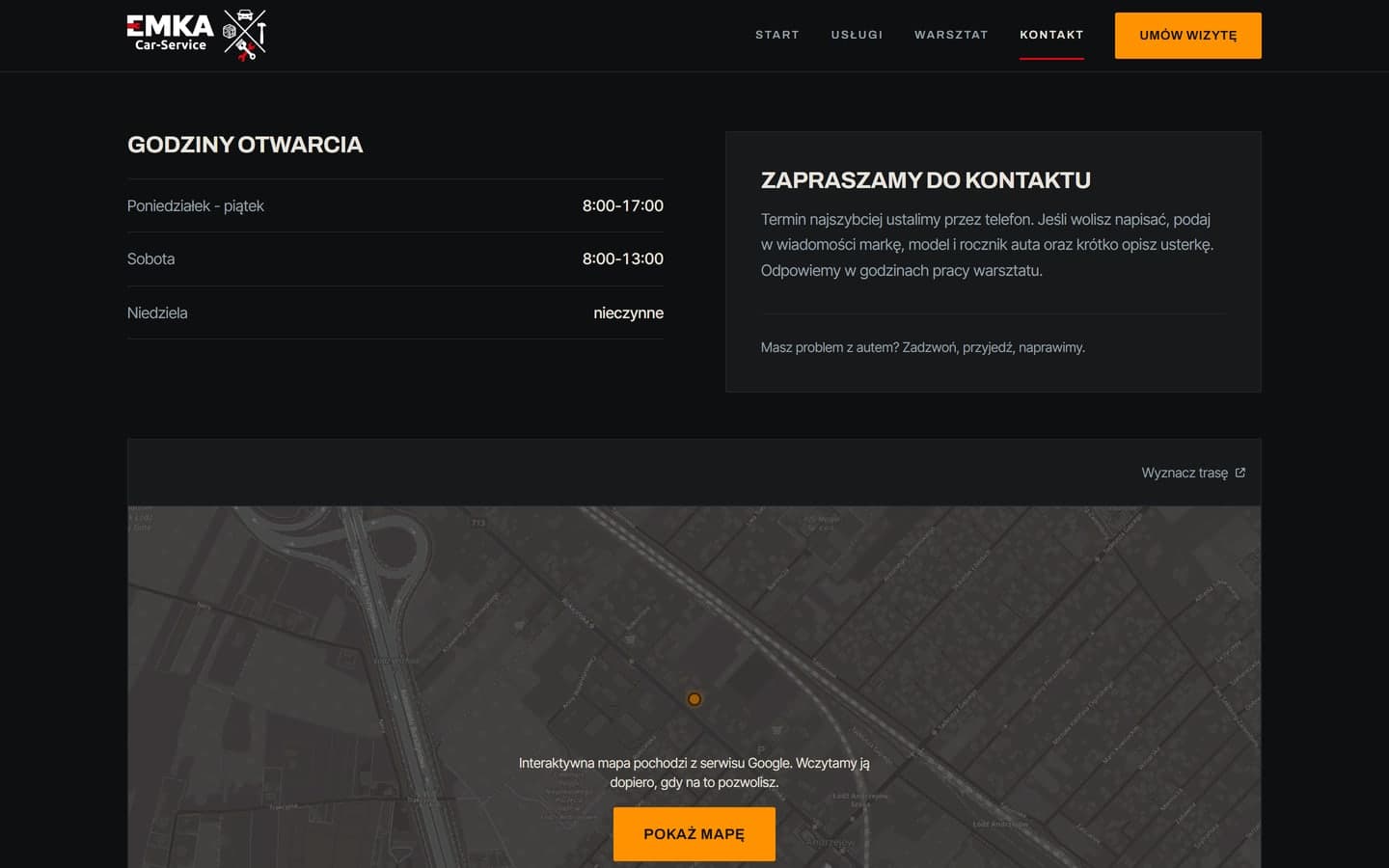
The contact page shows the opening hours, the address with a note on the location and a directions link, and a card with large phone and e-mail buttons. The card asks drivers to give the make, model and year of the car with a short description of the fault. The area preview is an OpenStreetMap image, and the interactive Google map loads only after a click.
The site uses no analytics or advertising cookies and serves its own fonts and photos, so it needs no consent banner. The privacy policy covers contact by phone and e-mail. The header, footer, contact page content and data for Google take the hours, address and phone number from one file.
The data for Google describes the shop with its address, coordinates, hours, service area and six services, and every page has its own title and description. A link shared in a messenger shows a preview image with the shop's logo. A Polish error page offers a way back home or a call to the shop. The site is built in Next.js and runs on Vercel's servers.
Selected screens
Planning a similar project? We give the exact price and timeline after a short conversation.
Ask for a quoteNext project
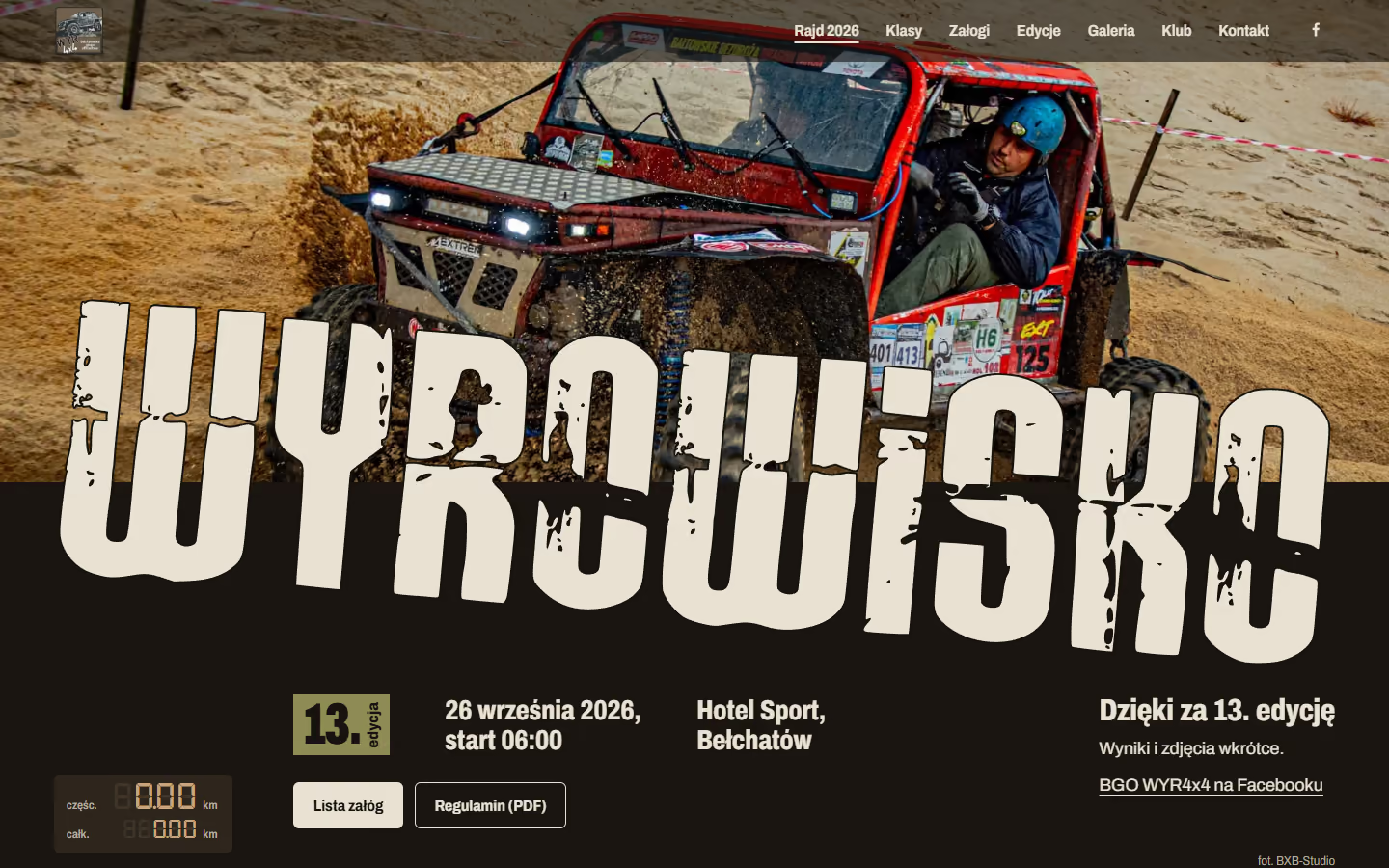
WYRowisko 2026
The organiser never retypes entries by hand, because the crew list refreshes itself from the club's registration page.